There’s no shortage of opinions on truck tires online. Forums are full of passionate debates, brand loyalists, and guys who swear by whatever came on their last rig. But when you’re pulling a gooseneck loaded with equipment, hauling a fifth wheel across Wyoming in January, or running a fleet that needs predictable, consistent performance — the stakes are higher than a heated comment thread.
This article is for truck owners who actually tow. Not light occasional stuff, but regular, meaningful loads. We’re breaking down the three brands that consistently come up in real-world towing discussions — Michelin, Bridgestone, and Goodyear — looking at what each brand actually offers for towing applications, where they shine, and where they fall short.
Why Tires Matter More When You’re Towing
Before we get into the brands, it’s worth being clear about what changes under tow. When you’re pulling weight, your rear axle absorbs the tongue load, your tires are under sustained higher pressure, steering response becomes heavier, and braking distance stretches. A tire that feels fine on an empty truck can become a liability when you’re loaded.
The key specs to care about when choosing the best tires for towing are load range (the ply rating equivalent), load index, tread compound durability under sustained heat, sidewall strength, and wet traction. A tire that wears evenly at 50,000 miles on a commuter truck might only get you 25,000 when you’re towing regularly — heat cycles from sustained load chew through compounds faster.
With that framing in mind, here’s how the three big names stack up.
Michelin: The Long-Haul Standard
Michelin’s flagship for trucks and light-duty towing is the Defender LTX M/S and its newer sibling, the Defender LTX M/S2. These tires are the most consistently recommended option across truck owner forums, tire review platforms, and long-haul towing communities — and for good reason.
Michelin builds the Defender LTX with MaxTouch Construction, which is their way of saying the contact patch is engineered to distribute load more evenly across the tread face. Under tow, this translates to more uniform wear even when your truck is carrying a constant tongue load. The EverTread compound is designed to resist the kind of heat buildup that kills other tires during sustained freeway towing.
Real-world longevity reports from heavy towers are strong. Users who average 30,000 to 40,000 towing miles per year consistently praise the LTX for lasting close to its 70,000-mile warranty on highway-dominant routes — even on V8 and diesel trucks. The Michelin LTX M/S2 carries a 70,000-mile treadwear warranty for non-LT sizes, and 50,000 for LT-rated fitments, which is honest about the added stress LT service puts on any tire.
Wet traction under load is where Michelin consistently earns its premium price. The siping pattern keeps the tire biting through rain even at 60–70% tread depth, which matters when you’re doing 70 mph on I-80 through a Wyoming squall with a loaded trailer pushing from behind.
Where Michelin falls short: Price. A set of Defender LTX tires typically runs $175–$280 per tire depending on size. You’re looking at $800–$1,500 installed for a full set, before any mounting and balancing fees. For fleet operators running multiple rigs, that adds up quickly. The Defender LTX M/S is also not the best tire in deep snow — its all-season siping handles light snow and slush well, but dedicated winter towing in serious snow conditions warrants switching to a purpose-built winter tire.
Bottom line on Michelin: If you tow regularly on highways, prioritize longevity, and want the most predictable handling under load year-round, Michelin is hard to beat. It’s the premium choice for a reason.
Goodyear: Built Tough, Better in the Cold
Goodyear’s primary offerings for truck towing applications are the Wrangler DuraTrac, the Wrangler Workhorse HT, and the Wrangler All-Terrain Adventure with Kevlar. Each serves a slightly different use case, which is worth understanding before buying.
The Wrangler DuraTrac is Goodyear’s go-to for people who tow in mixed conditions — pavement, gravel, snow, and occasionally soft ground. It features TractiveGroove Technology in the sidewall that provides additional bite in mud and soft terrain. In winter towing conditions, particularly in states like Wyoming where roads can be unpacked snow over ice, the DuraTrac’s more aggressive tread pattern provides noticeably better confidence than the Michelin LTX. On TireRack’s consumer ratings, Goodyear Wrangler tires consistently score higher for snow and winter traction than Michelin equivalents at similar price points.
The Wrangler Workhorse HT is Goodyear’s highway terrain option and a strong competitor at a lower price point — typically starting around $130–$194 per tire. It’s backed by a 60,000-mile warranty, features Goodyear’s Durawall Technology for sidewall puncture resistance, and scores well for hauling and towing stability. If you’re towing on sealed roads in more moderate climates and want a reliable, affordable option, the Workhorse HT is worth serious consideration.
The Wrangler All-Terrain Adventure with Kevlar is the middle ground — aggressive enough for light off-road, quiet enough for highway miles, and reinforced enough for regular towing. The DuPont Kevlar construction adds legitimate sidewall toughness, which matters when you’re airing down for a gravel forest road and still carrying a load.
Where Goodyear falls short: Highway tread life on the DuraTrac can be a weak spot. The more aggressive tread pattern that helps in snow and dirt wears faster on pavement under sustained towing load. Towers doing predominantly highway miles on fully loaded rigs should factor in a lower expected mileage versus the spec’d warranty. The Workhorse HT doesn’t have this issue, but it’s a much tamer tire on gravel and in deep snow.
Bottom line on Goodyear: The best choice if you tow in real winter conditions regularly, drive unpaved roads with loads, or want strong all-conditions confidence at a slightly lower price point than Michelin. The DuraTrac is particularly well-suited to the kind of towing done in mountain and high-plains states.
Bridgestone: Load Stability Without the Fanfare
Bridgestone doesn’t always win the headline comparisons, but they build excellent tires for towing — particularly if your priorities lean toward load stability, a quiet highway ride, and durable all-season performance on paved roads.
Their key options for trucks that tow are the Dueler H/L Alenza Plus, the Dueler H/T 685, and the Dueler A/T Revo 3. Each is built with Bridgestone’s commercial-grade construction in mind, and the Dueler H/T 685 in particular is often specified for fleet and commercial light-duty applications.
The Dueler H/T 685 is a highway terrain workhorse. It features twin heavy-duty steel belts that stabilize the tread under heavy towing loads, which reduces the squirm and wander you can feel in lighter-built tires when a trailer is pushing the back of your truck. On SimpleTire’s all-season truck tire ratings, it scores 9.3 out of 10 for traction — among the highest for any highway all-season truck tire. If you’re a fleet operator or you rack up towing miles exclusively on sealed roads, this is a legitimate alternative to the Michelin Defender LTX.
The Dueler H/L Alenza Plus targets drivers who want premium comfort alongside load capability. It’s a quieter, smoother ride than the Goodyear Wrangler options and competes directly with the Michelin Defender LTX on the highway. Treadwear warranties go up to 80,000 miles on certain sizes, though real-world performance under heavy towing load tends to come in below that figure — edge wear is a known weakness on Bridgestone’s touring-oriented tires when trucks are consistently loaded.
The Dueler A/T Revo 3 is Bridgestone’s all-terrain entry and a capable option for light trucks that mix towing with off-road use. It handles light mud and gravel reasonably well, runs quietly on the highway, and provides solid four-season traction. The Revo 3 also features run-flat technology in some configurations, allowing continued travel after a puncture — which is a meaningful benefit when you’re somewhere remote and loaded.
Where Bridgestone falls short: Value relative to Michelin. Premium Bridgestone tires like the Alenza Plus and H/T 685 sit in the $180–$270 per tire range, putting them in direct price competition with Michelin — and Michelin generally wins the head-to-head on longevity and wet weather performance. Bridgestone also changed their warranty terms in 2022, eliminating first-year free replacement and trimming their prorated coverage compared to competitors. That’s worth factoring into your total cost calculation.
Bottom line on Bridgestone: A strong option for highway-focused towing applications, particularly for fleet use and drivers who prioritize load stability and a quiet ride over aggressive all-terrain capability. The H/T 685 is especially underrated for commercial light-truck applications.
Load Range: The Variable Nobody Talks About Enough
Before you commit to any brand, verify the load range you’re buying. The same tire model from the same brand often comes in P-metric sizing and LT (light truck) sizing — and they perform very differently under tow.
LT-rated tires run at higher inflation pressures and feature stiffer sidewall construction. For trucks regularly towing at or near their rated capacity, LT-metric tires are worth the higher price and firmer ride. P-metric tires are engineered for lighter loads and will heat-cycle faster under sustained towing weight.
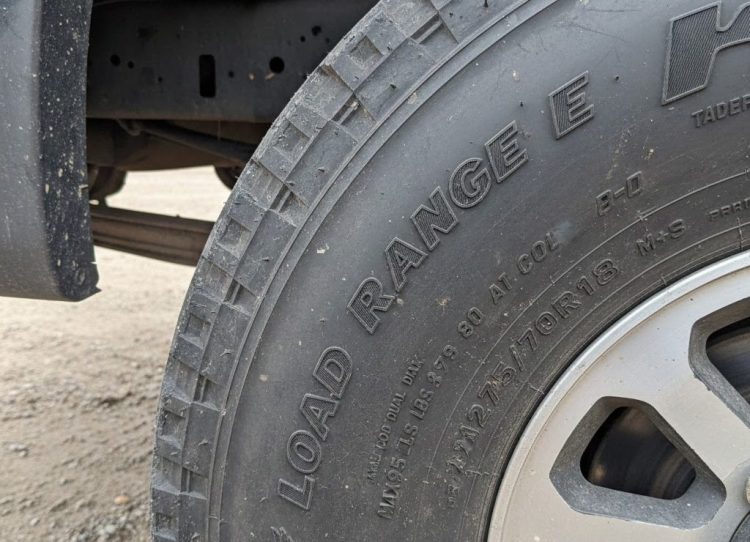
The load range ladder goes from Load Range C (6-ply equivalent) through D, E, and F. Most half-ton trucks running heavy towing benefit from E-range tires. Three-quarter-ton and one-ton trucks should be running E or higher depending on their typical loads.
All three brands — Michelin, Goodyear, and Bridgestone — offer their primary towing tires in LT sizing. Make sure you’re cross-shopping the same load range when evaluating price differences between brands.
Wyoming Conditions: What That Means for This Decision
For drivers operating in high-altitude, high-wind, and high-snow environments like Wyoming, tire choice carries extra weight. Interstate 80 through Rawlins and the surrounding high desert is notoriously unpredictable — clear and dry in the morning, blowing snow and ice by afternoon.
Under those conditions, here’s how the three brands rank:
- Best for winter towing confidence: Goodyear Wrangler DuraTrac. The more aggressive tread pattern and higher consumer snow scores make it the most dependable option when roads are compromised.
- Best for all-season highway towing: Michelin Defender LTX M/S or M/S2. Dominant wet traction, outstanding longevity, and the most consistent handling under sustained load on dry and damp pavement.
- Best for fleet highway applications: Bridgestone Dueler H/T 685. Commercial-grade construction, excellent load stability, and a strong traction score for a highway-spec tire.
If you’re running a mixed operation — highways in summer, mixed conditions in fall and spring, legitimate snow in winter — the practical answer is often the Michelin LTX for three seasons and a dedicated winter set (Bridgestone Blizzak W965 LTs are well-regarded for towing in deep snow) when the roads get serious.
So, Which Is Actually the Best Truck Tire for Towing?
It depends — but here’s the breakdown:
Choose Michelin Defender LTX M/S2 if you tow heavy loads on highways consistently, prioritize maximum tread life, and want the most predictable handling in wet and mixed conditions. It’s the most complete tire for year-round highway towing and worth every cent of the premium.
Choose Goodyear Wrangler DuraTrac if you tow in real winter conditions, run unpaved roads with loads, or want meaningful snow and ice traction without switching to dedicated winter tires. Accept that you’ll likely see lower highway tread life than the warranty suggests.
Choose Bridgestone Dueler H/T 685 if you’re running a fleet on mostly sealed roads, want commercial-grade construction at a competitive price, and prioritize load stability and a quiet ride over all-terrain versatility.
What unites all three is this: they’re premium tires built by companies with serious engineering behind their products. You won’t go wrong with any of them — but you will go wrong if you buy the wrong spec for your application. Know your load, know your terrain, know your season, and buy accordingly.
If your truck tires have taken a beating from hard miles, sustained towing loads, or Wyoming’s unpredictable roads, don’t wait until you’re stranded on the side of I-80. Explore our general repair and maintenance services to keep your truck road-ready and tow-ready year-round, or call us at (307) 324-0089 — our experienced team in Rawlins is available to help you get back on the road fast and keep your rig running the way it should.
