If you drive a commercial truck for a living, or manage a fleet that runs through Wyoming, you already know that breakdowns do not wait for convenient moments. They happen at 2 a.m. on I-80, in the middle of a snowstorm, 40 miles from the nearest town. What happens next depends almost entirely on who you call and what their mobile road service actually covers.
The problem is that “mobile road service” gets used loosely. Some providers use it to mean a jump start and a tire change. Others mean a fully equipped service truck with a trained diesel technician who can diagnose and repair your rig on the spot. Those are very different things, and if you are stuck on the side of the road with a loaded trailer, the difference matters.
This post breaks down what a standard mobile road service package should include, what separates a basic call from a genuinely useful one, and what questions to ask before you ever need to make that call.
What Mobile Road Service Actually Means
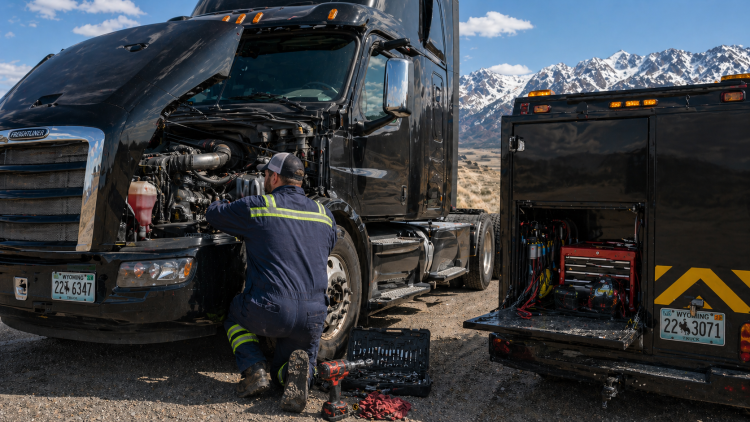
Mobile road service, at its core, means a technician comes to your vehicle rather than you going to a shop. Instead of waiting for a tow, sitting in a repair bay for hours, and paying both towing and shop labor costs, a qualified technician drives out to your location in a fully stocked service truck and handles the repair or fix on the spot.
For passenger vehicles, this usually means jump starts, lockouts, and tire changes. For commercial trucks and semi-trailers, it means something significantly more involved. A real mobile road service for heavy equipment should include diagnostic capability, mechanical repairs, and the parts and tools to handle the most common breakdown scenarios without leaving you stranded for longer than necessary.
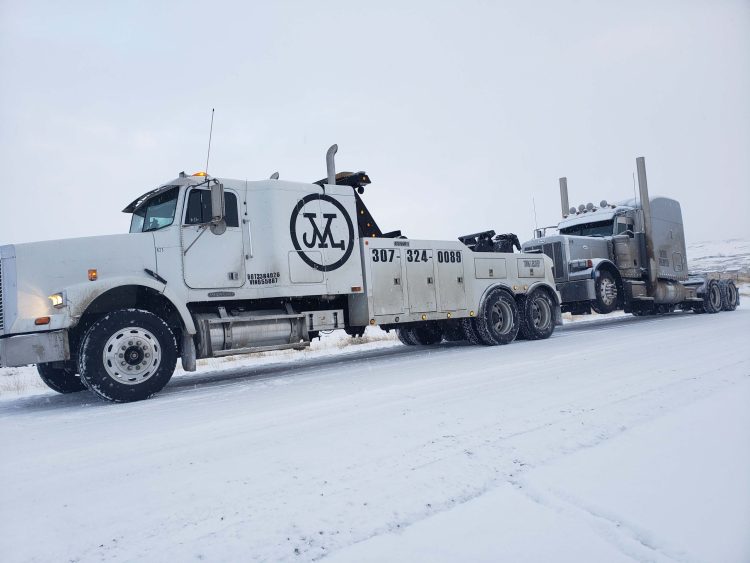
The geography of Wyoming makes this especially important. Drivers running I-80 through Carbon County are often far from a dealership or a full service shop. Getting a capable technician on site fast is the difference between a two-hour delay and a two-day nightmare.
The Core Services in a Standard Package
Not every provider structures their packages the same way, but a legitimate mobile road service operation for commercial vehicles should cover the following as standard.
Diagnostics and Engine Code Reads
Before anything can be fixed, you need to know what is wrong. A properly equipped service truck carries the software and hardware to pull diagnostic codes from the major engine platforms. For commercial trucks, that means Detroit, Cummins, and CAT at minimum. Some providers also cover Volvo and International engines.
If the technician cannot plug in and read codes on site, they are working blind. That wastes time and increases the chance of misdiagnosis. When you are evaluating a mobile road service provider, ask specifically which engine platforms they can diagnose. If they cannot give you a clear answer, that tells you something.
Tire Changes and Roadside Tire Repairs
Tire issues are among the most common reasons commercial drivers call for roadside assistance. A blowout on a steer axle, a flat on a drive tire, or a trailer tire going down can all stop your run. A good mobile road service package includes the ability to change commercial truck tires on site, including the ability to handle the physical demands of a 22.5-inch truck tire without sending you to a tire shop first.
Some providers also carry a limited supply of replacement tires or can source them quickly if the damage means a spare will not get you far enough. This is worth asking about before you sign up with any provider.
Jump Starts and Electrical Checks
Dead batteries are common, especially in cold Wyoming winters. A standard mobile road service call should include a commercial-grade jump start that can handle the dual-battery systems on most semi-trucks. Beyond the jump start itself, a good technician will also check the charging system to determine whether the battery is the actual problem or a symptom of something else, like a failing alternator.
Electrical problems are some of the trickier issues to diagnose roadside, but a well-equipped service truck will carry basic wiring tools, test equipment, and common fuses and relays to handle straightforward electrical faults on the spot.
Fuel Delivery
Running out of fuel seems like something that should not happen to a professional driver, but it does, particularly in areas where fuel stops are far apart. It also happens when a fuel gauge malfunctions or a driver misjudges range in cold weather, which affects fuel economy significantly. Mobile road service should include diesel fuel delivery to get you started and moving again.
Some providers include a set amount of fuel as part of the service call. Others charge separately per gallon. Either way, this should be explicitly part of what your provider offers.
Air System Repairs and Air Line Leaks
Air system issues are extremely common on commercial vehicles. A leaking air line, a bad glad hand, or an air dryer that has given up can prevent a truck from building enough pressure to release the brakes or keep the trailer connected properly. These repairs are often straightforward with the right fittings and tools on hand.
A complete mobile road service package should include the ability to diagnose and repair basic air system faults on site. Technicians should carry common air fittings, lines, and valves to handle the most frequent failure points without needing a shop.
Brake Adjustments and Basic Brake Work
Out-of-adjustment brakes are a common DOT compliance issue and a genuine safety problem. Mobile technicians should be able to perform manual brake adjustments on S-cam brake systems and check for obvious mechanical issues. More involved brake work, like replacing shoes or drums, may require a shop visit, but a qualified road service technician should be able to stabilize the situation and get you moving legally and safely.
Cooling System Checks and Hose Repairs
Overheating is another common breakdown cause, especially in summer or during hard pulls in mountainous terrain. A burst hose, a leaking connection, or a low coolant situation can shut down an engine fast. Mobile road service should include the ability to diagnose cooling system issues, replace common hoses, and top off coolant to get you back on the road.
This is not always a permanent fix. Sometimes a truck needs a deeper repair at a shop. But a good mobile technician can assess the situation honestly and either fix it roadside or give you a clear picture of what needs to happen next.
Lockout Services
Getting locked out of a truck cab is more common than most drivers admit. It is also a fixable problem that should be included in any standard mobile road service package. This one is straightforward but worth confirming before you need it.
What Separates a Good Provider from a Basic One
Knowing the list of services is useful, but it does not tell you everything. Two providers can offer the same list and deliver very different results in practice. Here is what actually separates a quality mobile road service operation from one that will leave you frustrated.
Response Time
Speed matters enormously when you are blocking a lane on I-80 or sitting in a berm in freezing temperatures. A provider that claims 24/7 availability but takes three or four hours to respond is not genuinely useful in an emergency. Ask about average response times in your area. Providers with locally based service trucks will almost always outperform national dispatch services that subcontract calls.
For drivers running through Carbon County, Rawlins, Sinclair, and Wamsutter, a local provider who knows the roads and can reach you in under an hour is worth far more than a national plan with slow response.
Technician Certification and Training
Not all roadside technicians have the same skill level. For heavy commercial vehicles, you want technicians who are trained specifically on diesel engines and commercial truck systems. Certifications from engine manufacturers like Cummins or Detroit, or credentials like the Wrecker Master certification for recovery operations, indicate a higher level of professional preparation.
Ask your provider what certifications their technicians hold. A provider who cannot answer that question clearly may be sending out general mechanics without the specific training your truck requires.
Equipment on the Service Truck
A service truck that shows up without the right parts or tools cannot fix your problem no matter how skilled the technician is. A well-stocked mobile road service vehicle should carry diagnostic equipment, common filters, belts, hoses, fittings, air line components, electrical supplies, and basic fluids. Some providers also carry a limited tire inventory.
The more a service truck can handle without a parts run, the faster you get back on the road. Ask providers how their service trucks are stocked and whether they carry parts for the specific makes and models in your fleet.
Coverage Area
Mobile road service is only useful if it can reach you where you break down. A provider based in Rawlins who covers a 100-mile radius is going to serve I-80 drivers very differently than one who only works within city limits. Before you commit to a provider, confirm their actual service area and what happens if you break down at the edge of or outside that radius.
Fleet Accounts and Scheduled Mobile Service
Many trucking companies and fleet operators miss an opportunity by only thinking about mobile road service in emergency terms. A good provider should also offer scheduled mobile maintenance, where a technician comes to your yard or staging area to handle preventive maintenance, inspections, and minor repairs on a regular basis.
This reduces emergency calls, keeps vehicles in compliance, and cuts down on unplanned downtime. If you manage a fleet operating out of Wyoming, ask your mobile road service provider whether they offer fleet accounts with scheduled service as part of the arrangement.
What Mobile Road Service Cannot Always Fix
Honesty matters here. There are situations where mobile road service gets you stabilized but cannot fully resolve the problem. A blown turbocharger, major engine internal damage, a cracked frame, or a transmission failure are examples of issues that require a full shop environment. A good mobile technician will tell you this clearly and quickly rather than attempting a field repair that creates a bigger problem down the road.
What mobile road service should always do, even when the repair requires a shop, is accurately diagnose the problem, take steps to prevent further damage, and help coordinate towing to the right facility. That diagnostic value alone saves time and avoids the situation where a truck gets towed to a shop that cannot actually handle the repair.
Questions to Ask Before You Need Mobile Road Service
If you are evaluating providers now, while things are running fine, here are the specific questions worth getting answered:
What engine platforms can you diagnose on site? What is your average response time to my typical routes? Are your technicians certified on diesel commercial engines? What parts do your service trucks carry? Do you offer fleet accounts or scheduled mobile maintenance? What is your coverage area, and what happens outside it?
Getting answers to these questions before a breakdown puts you in a much stronger position when something actually goes wrong.
The Bottom Line
A standard mobile road service package should cover diagnostics, tire changes, jump starts, fuel delivery, air system repairs, basic brake adjustments, cooling system work, and lockouts. For commercial trucks specifically, it should include coverage for the major diesel engine platforms and the ability to work on heavy equipment, not just passenger vehicles.
The geography of I-80 through Wyoming is unforgiving. Drivers and fleet operators in Carbon County need a provider who is local, fast, properly equipped, and honest about what they can and cannot handle in the field.
If your truck goes down in Rawlins, Sinclair, or Wamsutter, you need a team that can reach you quickly and actually solve the problem. Explore our mobile road service for a full breakdown of what we cover, or call us directly at (307) 324-0089 and we will get a technician moving toward your location.
